Hydrating Facials for Dry & Dehydrated Skin in Aurora
Colorado's dry air, strong sun, and quick seasonal changes can leave skin feeling tight, dull, or depleted. Shrii's hydrating facials are personalized around what your skin shows on the day, with gentle exfoliation, replenishing hydration, and barrier-conscious care.
Local Conditions
Why Does Skin Feel So Dry in Colorado?
Colorado asks a lot of skin. Colorado's low humidity can increase moisture loss from the skin, especially when combined with wind, sun exposure and indoor heating. Together these conditions leave skin feeling tight, rough, or dull almost year-round rather than only in winter.
Altitude is part of the picture too. At Aurora's elevation the environment is simply drier and more exposed than at sea level, and that often shows up as skin that seems to need more hydration than it once did. Seasonal shifts layer on top of this: temperatures swing quickly, indoor and outdoor air differ sharply, and the skin is asked to adjust again and again.
Daily habits can quietly add to the load as well. Cleansing with very hot water, exfoliating more often than the skin tolerates, or reaching for stronger products every time tightness appears can leave skin feeling depleted instead of comfortable. None of this is unusual or alarming — it is the ordinary reality of living in a dry climate, and it is exactly the kind of context a personalized facial is designed around.
One of the most common concerns Rashmi sees among Aurora clients is skin that feels tight or dull even when they are already using moisturizer.
Two Different Things
Dry Skin and Dehydrated Skin Are Not Exactly the Same
The words are often used interchangeably, but they describe two different things — and the difference matters when deciding how to care for your skin.
About oil
Dry Skin
Dry skin naturally produces less sebum, the skin's own oil. It tends to feel rough, flaky, or tight, and it can look less supple than skin with a fuller lipid layer. This is a skin type — a characteristic you tend to have rather than a passing state — and it usually responds to richer, moisture-holding care.
About water
Dehydrated Skin
Dehydrated skin is short on water, which can happen at any oil level. Skin may be oily or combination and still feel dehydrated, showing up as dullness and tightness with fine lines that seem to deepen when hydration is low. It often responds to water-attracting hydration without heavy products.
Signs Skin May Be Asking for Hydration
- Tightness after cleansing
- A dull or tired appearance
- Rough or uneven texture
- Fine dehydration lines
- Flaky patches
- General discomfort or sensitivity
These signs can have many causes, and they overlap with other things entirely — from weather and travel to product reactions. Persistent irritation, or a skin condition that has been diagnosed, should be evaluated by an appropriate healthcare professional rather than worked out through trial and error at home.
Shaped Around Your Skin
Why the Treatment Should Be Different
Because dry and dehydrated skin are not the same, a single hydrating facial applied identically to everyone would miss the point. Skin that is naturally dry may benefit from richer, more moisture-holding care and very gentle exfoliation, while skin that is only temporarily dehydrated — from travel, heating, or a run of cold weather — may respond to lighter, water-attracting hydration without much exfoliation at all. Oily skin that is dehydrated needs a different balance again.
This is where personalization does real work. Before anything begins, Rashmi takes in the factors that shape a treatment: how oily or dry the skin actually is, how sensitive it tends to be, what your current routine looks like, how much exfoliation your skin has been getting, where the season sits, how the skin has tolerated products in the past, whether you have travelled recently, and simply how the skin looks and feels on the day. Two clients with the same complaint can leave with genuinely different treatments — and that is the intention.

Hydration First
Hydration Without Overworking the Skin
There is a common assumption that if skin feels dry, the answer is more — more exfoliation, more products, more intensity. In practice, dry-feeling skin often benefits from the opposite. Stripping treatments, aggressive scrubs, and layers of strong actives can leave already-dry skin feeling more uncomfortable, not less, and the tightness that follows is easily mistaken for a sign that still more is needed.
The approach here is hydration-first, with restraint. Intensity is matched to the skin rather than to a standard, and the goal is a treatment the skin can welcome rather than one it has to endure. Gentle exfoliation is used where it genuinely helps, hydration is layered generously, and finishing care is chosen to leave skin feeling settled. When skin looks comfortable and well hydrated, a fresher, more even appearance tends to follow on its own — no force required.
The Approach
How We Approach Dry and Dehydrated Skin
Every step below is adjusted to the skin in front of it, so the sequence is never identical from one client to the next. What follows is the general shape of the care, not a fixed routine everyone receives.
Gentle Cleansing
Cleansing is done warmly rather than aggressively, with products chosen for dry or reactive-feeling skin, so the barrier is respected from the very first step.
Appropriate Exfoliation
Exfoliation is used to lift dullness and help skin feel smoother, at a level and frequency your skin actually tolerates. It is a tool to reach for, not a default to apply.
Hydration
Hydration is layered through the treatment — water-attracting and moisture-holding ingredients together — rather than left to a single step at the end.
Botanical Support
Botanical oils, herbal preparations, and calming plant ingredients are used where they add comfort and nourishment, alongside professional formulations chosen for fit.
Hands-On Techniques
Massage, Gua Sha, and Kansa wand work may be included where appropriate, bringing warmth and gentle movement to the facial tissue without stressing the skin.
Finishing Care
The session closes with finishing products selected for your skin, followed by practical guidance you can realistically keep up with at home.
Comfort Starts Here
Why the Skin Barrier Matters
The skin's outermost layers do quiet, essential work: they help hold moisture in and keep the outside world at a comfortable distance. When those layers are doing well, skin tends to feel supple and look even. When they are stressed — by harsh cleansing, too much exfoliation, cold and dry air, or a run of products the skin did not tolerate — skin can feel tight, sting, or look flushed and uneven.
It is worth being careful with language here. This is not about diagnosing damage; it is about noticing a compromised-feeling or stressed skin barrier and responding kindly. Keeping the routine gentle, maintaining hydration, and resisting the instinct to pile on stronger products all support comfort and appearance — and Colorado's dry, exposed environment makes that attention especially worthwhile.
Easing Off
When Dry Skin Leads to Doing Too Much
Dryness often prompts more effort, and some of the most common habits make dry-feeling skin worse rather than better. These are the patterns worth watching.
Aggressively exfoliating flakes
Flaking skin can tempt a harder scrub, but that often leaves it more irritated. Flaking is usually a sign to hydrate more, not to exfoliate harder.
Very hot water
Hot showers and hot cleansing feel soothing in the moment but can leave skin feeling tighter afterward. Warm water is gentler on dry skin.
Constantly changing products
Switching products every week makes it hard to tell what helps, and it tends to keep already-dry skin unsettled rather than calmer.
Over-cleansing
Cleansing more often than the skin needs, or with strong cleansers used repeatedly, can strip comfort along with the day’s buildup.
Layering multiple strong actives
Stacking several powerful ingredients at once is often more than dry skin can comfortably handle, and it makes reactions harder to read.
Assuming every dry feeling needs exfoliation
Dryness and dullness are not the same problem. Reaching for exfoliation first is often the wrong reflex for skin that simply needs hydration.
Care Through the Seasons
Your Skin May Need Different Care Through the Colorado Year
Skin is not static, and in Colorado the year moves through conditions that ask different things of it. The treatment that suits you in January is rarely identical to the one that suits you in July — not because your skin becomes a different skin, but because the environment around it changes.
Winter
Indoor heating runs constantly and draws moisture from the air, while the outdoor air is cold and dry. Skin often feels its tightest now, and richer hydration tends to earn its place.
Spring
Weather swings quickly and the environment changes week to week. Skin can feel unsettled and reactive, so care often leans gentler and more consistent.
Summer
Strong sun, heat, and more time outdoors increase exposure. Hydration and thoughtful sun protection matter, and heavy products can feel like too much.
Fall
Temperatures drop and the air returns to its drier character. Many people find skin begins to feel tight again, making it a good time to rebuild a hydrating routine.

None of this means everyone needs an entirely different set of products each season. It means the emphasis shifts — usually a matter of degree rather than a wholesale change — and the treatment can move with it.
Facials support the cosmetic appearance and comfort of the skin. Persistent redness, pain, severe flaking, lesions, or a diagnosed skin condition should be evaluated by an appropriate healthcare professional.
The Hydrating Menu
Facials for Dry, Dehydrated or Dull Skin
Three treatments that lean toward hydration and comfort, each shaped around different skin needs and levels of restoration.
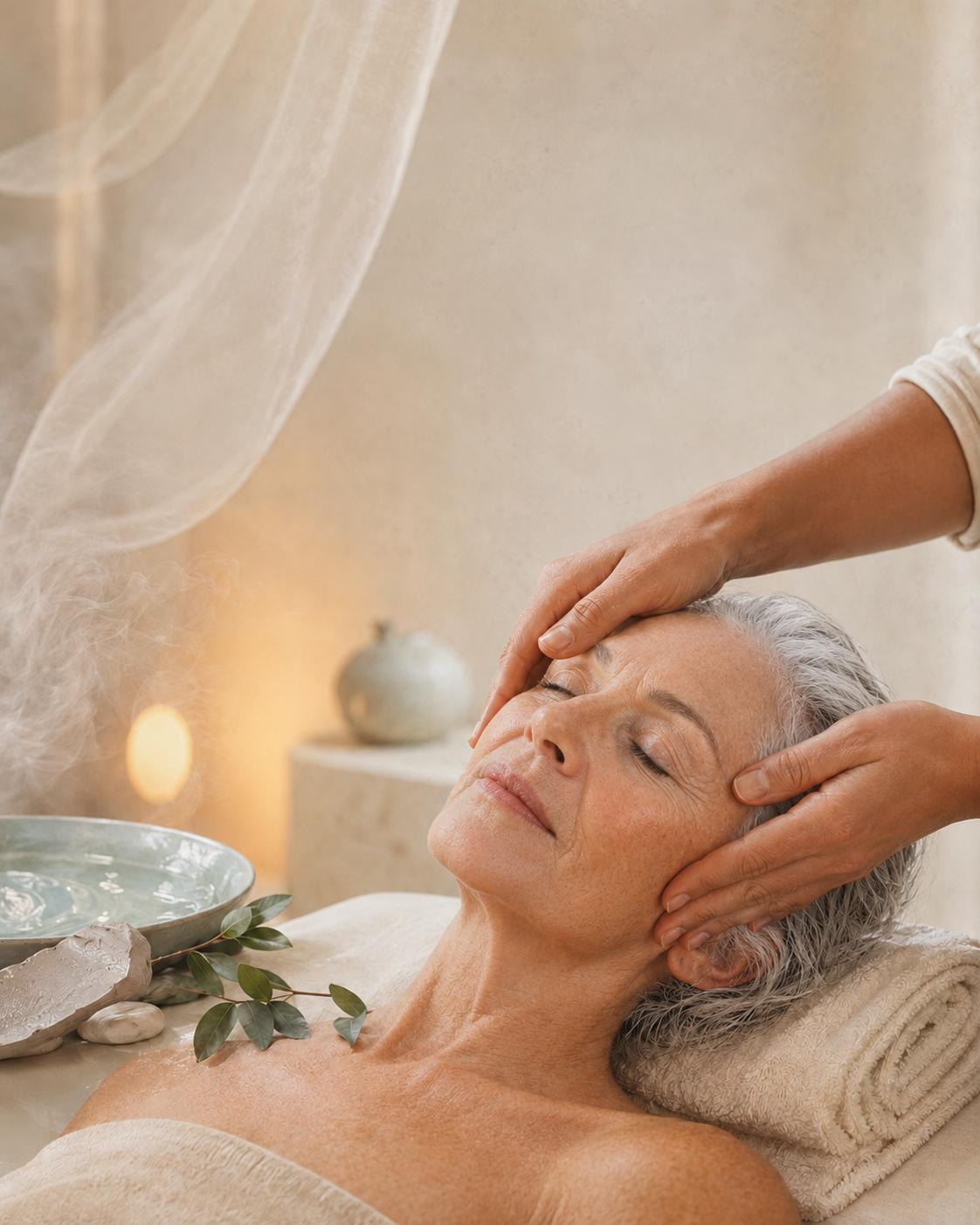
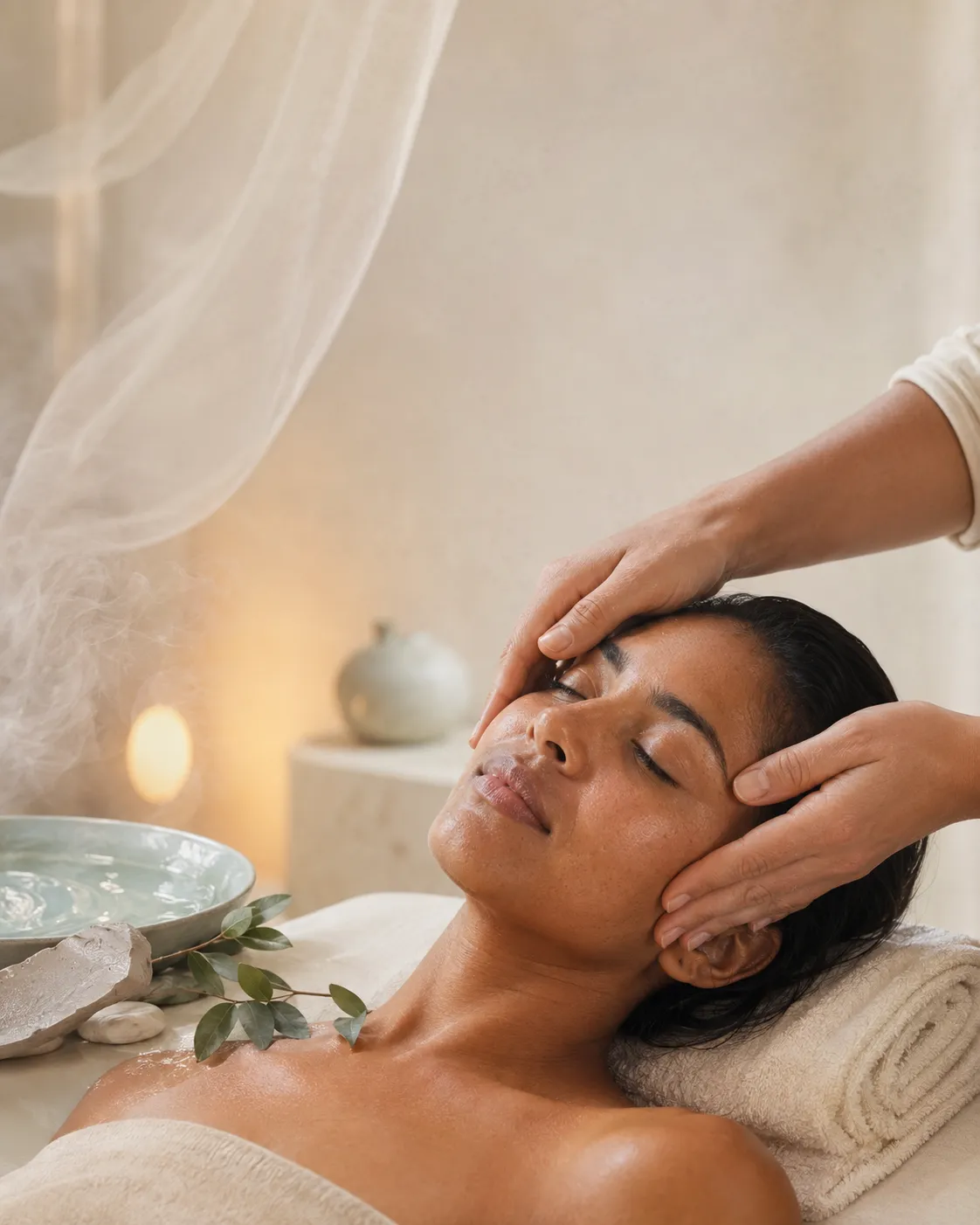
Elemental Balance Facial (Dosha Samya)
A comfort-first facial composed around your skin's balance. Gentle cleansing, herbal Ubtan exfoliation, and a custom botanical serum are layered with Marma point pressure to settle both skin and senses. A reassuring place to begin when skin feels tight or depleted.
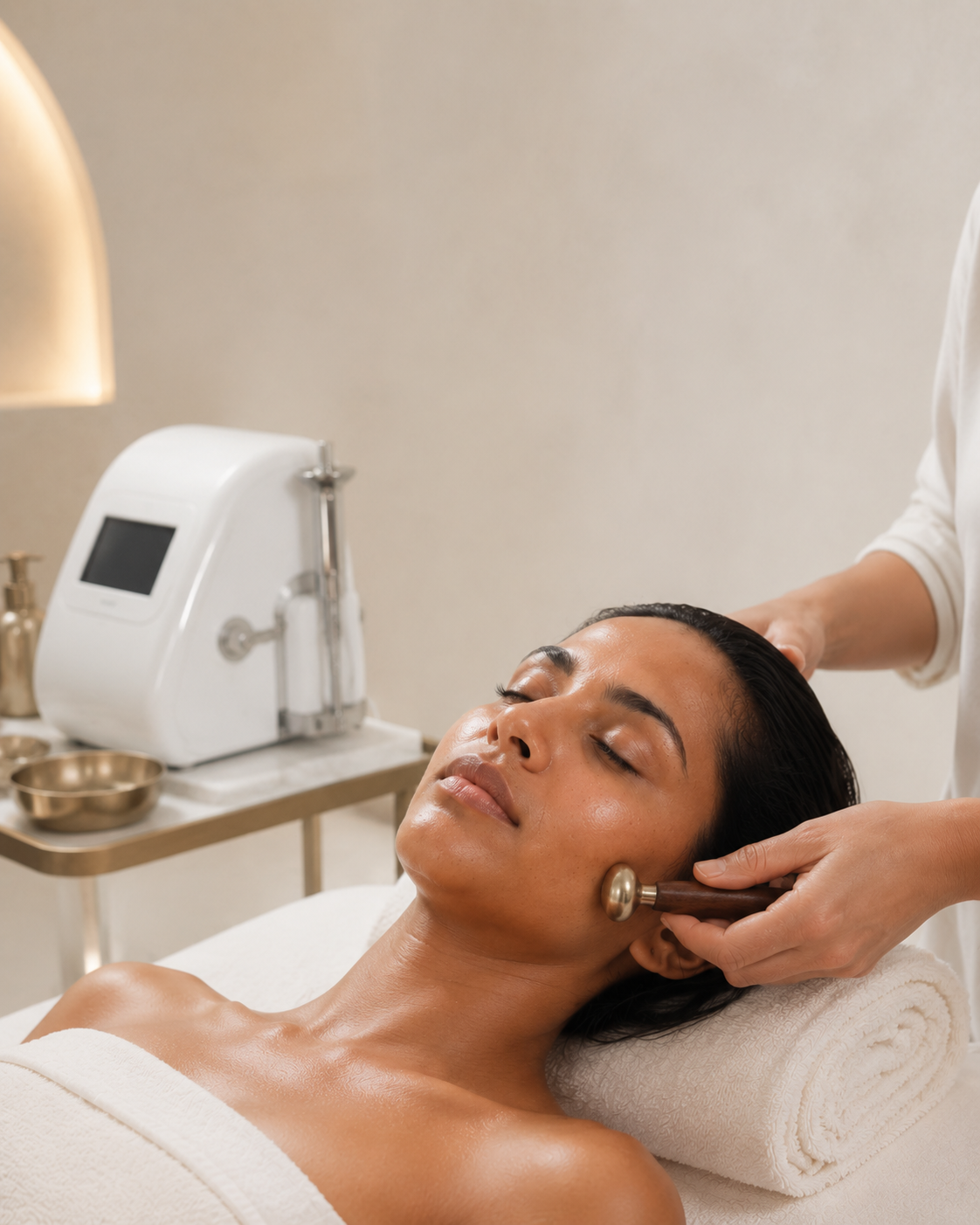
East-West Integrative Radiance Facial (Ojas)
Hydration paired with restoration in a single appointment. The first half gently resets the skin with cleansing and professional exfoliation; the second glides a warm Kansa wand to lift, sculpt, and encourage a fresher, less puffy look. A scalp and crown Marma massage closes the treatment in calm.
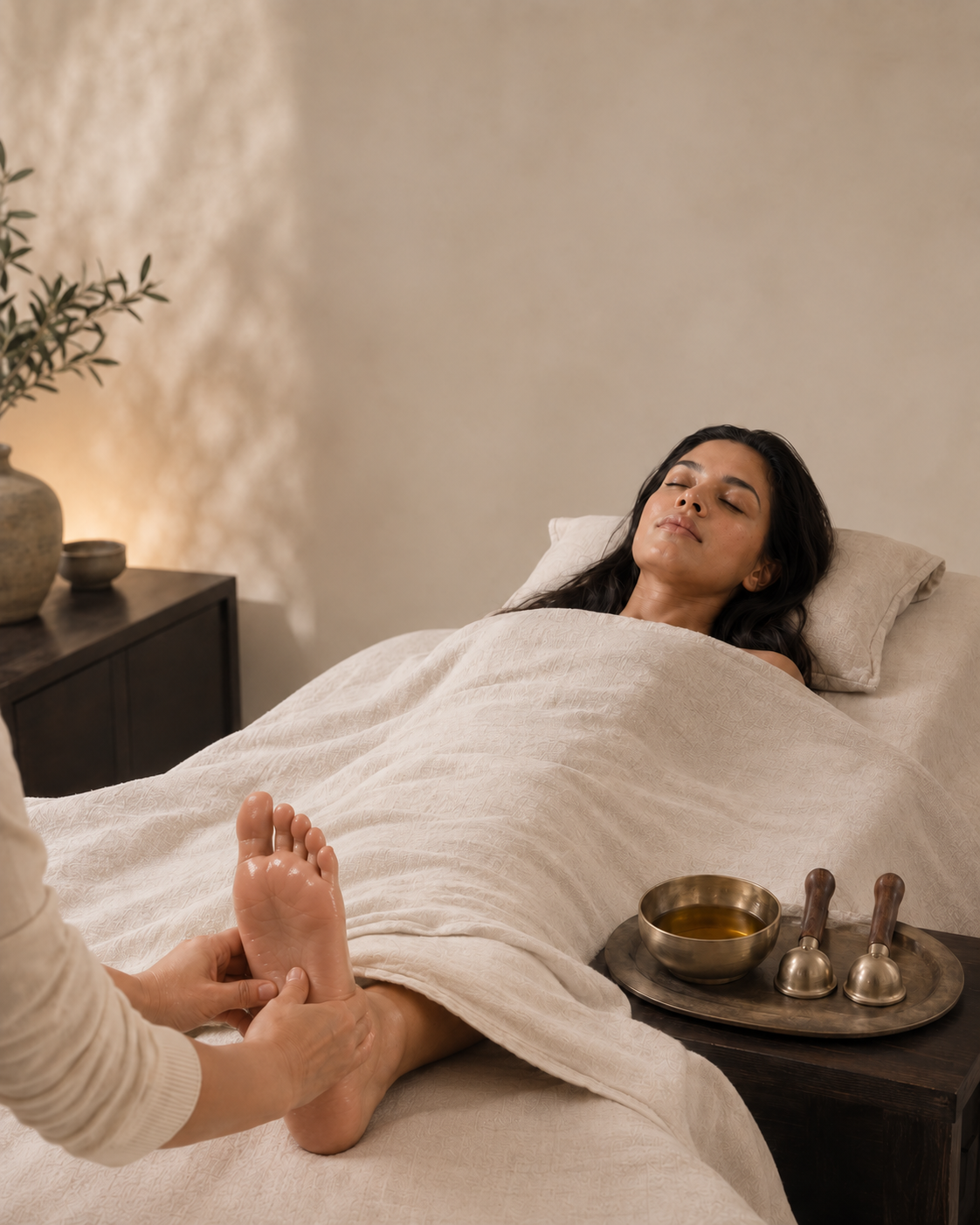
Shrii Signature Rasayana Ritual Facial
The studio's flagship 90-minute immersion. Extended Kansa wand sculpting with warm botanical serums gives way to custom facial Marma balancing, while the treatment mask sets during a warm-oil scalp massage and a grounding foot treatment. The most restorative way to experience hydrating, whole-body care at Shrii.
Choosing With Confidence
Not Sure Which Facial to Choose?
You do not need to diagnose your own skin before you book. If you are unsure, choose the treatment that sounds closest to what your skin is asking for — the Elemental Balance Facial is the most adjustable and gentle place to begin — and Rashmi will refine the plan after seeing and feeling your skin during consultation. The appointment is designed to flex around what she finds, not to lock you into a choice made in advance.
If your main concern is dullness or congestion rather than dryness, the Modern Radiance Facial on the full menu leans more toward resurfacing and may suit you better. You can also explore the full treatment menu, or simply book the closest option and let the consultation guide the rest.
If you would rather take a gentler, botanical-forward path, explore our natural and holistic facials in Aurora — the same personalized philosophy, approached through botanical and Ayurvedic-inspired care.
At Home
Supporting Hydration Between Facials
Professional care works best when it is supported by a simple routine at home rather than a complicated one. A few consistent habits do most of the work: cleanse gently, and avoid water that is unnecessarily hot; moisturize consistently rather than only when skin feels dry; pay attention to how much exfoliation your skin actually tolerates and ease off when it feels like too much; protect skin with daytime sun protection, especially at altitude; and introduce no more than one new or active product at a time so you can tell what helps.
None of this is a prescription, and none of it requires a shelf of products. It is simply the ordinary, unglamorous consistency that helps hydration hold between appointments.
Meet Your Aesthetician
Personalized Care With Rashmi
Your care is guided by Rashmi Bhandari, a Licensed Aesthetician in the state of Colorado with a Master's in Ayurveda and Integrative Medicine. Her practice brings professional skincare and Ayurvedic tradition together, and it shapes how dry and dehydrated skin is approached here: hydration first, restraint where intensity would not serve the skin, and technique chosen for comfort as much as for visible results.
Rashmi has spent years working with skin in Colorado's specific conditions, so the guidance you receive is grounded in this environment rather than borrowed from somewhere wetter. She reads each skin before deciding how a treatment should move, and she adjusts as the appointment unfolds. You can read more about her background and training on the About page.
Good to Know
Frequently Asked Questions About Dry and Dehydrated Skin
What is the difference between dry and dehydrated skin?
Dry skin lacks oil: it produces less sebum and tends to feel rough, flaky, or tight. Dehydrated skin lacks water, which can happen at any oil level. They can look similar and often occur together, but the distinction guides how much hydration, richer moisture, and exfoliation your skin actually needs.
Can oily skin also be dehydrated?
Yes. Dehydration is about water, not oil, so oily and combination skin can be dehydrated too — often showing up as skin that feels tight and looks dull while still being prone to congestion. It is one reason a facial for dry-feeling skin is not simply a heavier treatment for everyone.
Can a facial help dry-feeling skin?
A facial may help improve hydration, comfort, and appearance by supporting the skin with gentle cleansing, appropriate exfoliation, and generous hydration. It supports how skin looks and feels rather than treating a medical condition, and results vary from person to person.
Which Shrii facial is best for dry skin?
For dry-feeling skin, the Elemental Balance Facial is often the gentlest starting point, while the East-West Integrative Radiance Facial pairs hydration with sculpting and the Rasayana Ritual offers a longer, more restorative experience. That is guidance rather than a rule — Rashmi assesses your skin first and may adjust the treatment to fit what she finds.
How often should I get a hydrating facial?
It depends on your skin, your goals, and how consistent your home care is. Some clients come monthly to maintain comfort, while others come seasonally, when Colorado’s air turns dry. Your aesthetician can suggest a realistic rhythm rather than a fixed schedule.
Why does my skin feel drier after moving to Colorado?
Colorado’s air is notably dry, and at altitude there is simply less moisture in it. Add strong sun, wind, and indoor heating, and skin can feel drier than it did elsewhere, even if your routine has not changed. A hydrating routine and regular professional care can help skin adapt.
Should dry skin still be exfoliated?
Often yes, but gently. Gentle exfoliation can help lift excess flaky surface cells and leave dry skin looking smoother, but intensity and frequency matter. Over-exfoliation tends to leave skin feeling worse, not better.
Can I get a facial if my skin is very sensitive?
Yes, with adjustments. Let your aesthetician know about sensitivity or any diagnosed condition during intake, so products, exfoliation, and pressure can be modified. If a skin condition is being managed by a healthcare professional, a facial is meant to work alongside that care, not replace it.
Begin Your Ritual
Give Dry Skin a More Thoughtful Kind of Care
If your skin has been feeling dry, tight, or simply less comfortable than it used to, a stronger treatment is not always the answer. A personalized facial can focus on hydration, comfort, and the level of exfoliation your skin genuinely tolerates. Book a treatment, or explore the broader facial menu for Aurora first.