Ayurvedic Facials in Aurora, Colorado
Shrii brings Ayurvedic tradition into professional facial care through botanical preparations, warm oils, Kansa wand work, Marma-inspired techniques and an individualized approach to the skin — guided by a Colorado-licensed aesthetician with a Master's in Ayurveda and Integrative Medicine.
Starting With the Basics
What Is an Ayurvedic Facial?
An Ayurvedic facial is a professional facial that draws on the traditions of Ayurveda — a long-established Indian system of wellbeing — for some of its ingredients, techniques and rhythms, while remaining a modern, licensed aesthetic treatment. It is not a different category of skincare from a clinical one; it is a facial approached with additional traditions in mind.
At Shrii, that influence can appear in several ways:
- An individualized treatment composed around your skin on the day rather than a fixed protocol
- Botanical oils and herbal preparations, including traditional blends such as Ubtan where they suit the skin
- Warmth, whether from warm oils, warm towels or the unhurried pace of the work itself
- Rhythmic, hands-on technique — massage and facial manipulation done slowly and deliberately
- Marma-inspired pressure applied gently at traditional points
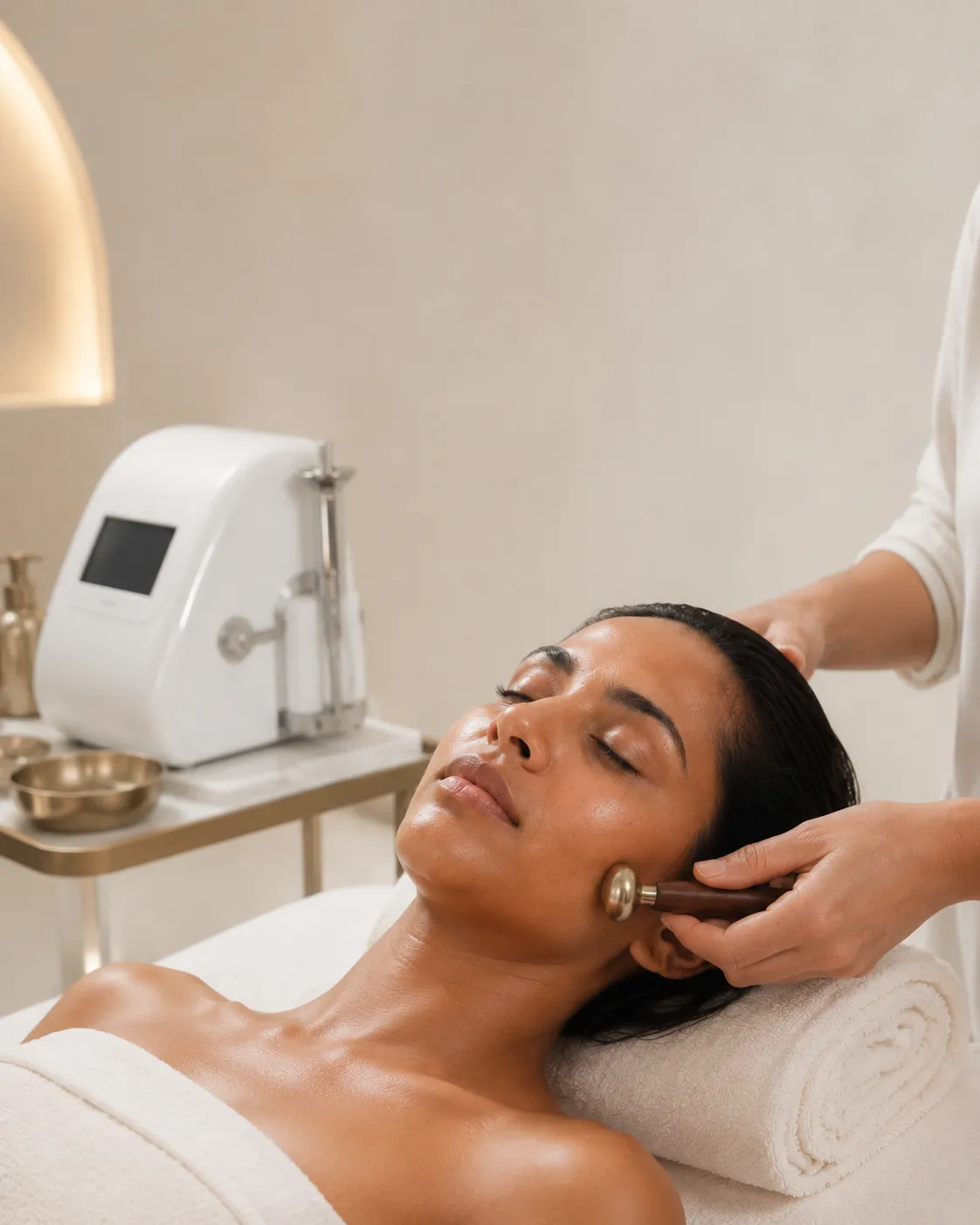
- Kansa wand work using a traditional metal facial tool
- Scalp treatment incorporated while a mask rests, depending on the treatment
- Close attention to relaxation and the sensory experience of the appointment, not only the visible result
One thing is worth stating plainly: at Shrii, Ayurveda complements licensed aesthetic practice rather than replacing it. These techniques are used for cosmetic care, comfort and relaxation. This is not medical Ayurvedic treatment, and it is not intended to diagnose or treat any disease.
Ayurveda shapes the way I look at each facial as an individual experience rather than a fixed routine. I consider the skin, the season, the client's comfort, and what their skin seems to need that day. My Ayurvedic training influences how I use botanical ingredients, Kansa, Marma-inspired touch, warm oils, and restorative techniques, while my aesthetician training guides the professional skincare side of the treatment. For me, the goal is to bring both traditions together thoughtfully and create care that feels personal, grounded, and deeply restorative.
No Background Required
Ayurveda, Explained Simply
Ayurveda is one of the world's older systems of wellbeing, developed in India over many centuries. Rather than a single remedy or ritual, it is a broad tradition built around a few durable ideas: that people differ from one another, that daily habits and environment matter, and that care is most useful when it is adapted to the individual rather than applied uniformly.
That is the part of Ayurveda most relevant here. Its traditional concepts include constitutional types, seasonal rhythms and the use of oils, herbs and hands-on techniques, but you do not need to study any of it to benefit from an Ayurvedic-inspired facial at Shrii. There is no test to pass and nothing to memorize. If you are curious, your aesthetician can explain each technique as it is used; if you would rather simply relax and let the treatment happen, that is equally welcome.
A Framework, Not a Recipe
Do Doshas Determine Your Facial?
Doshas are one of Ayurveda's traditional frameworks — Vata, Pitta and Kapha — and they can be a useful way of thinking about tendencies and balance. What they are not, at Shrii, is a rigid recipe. You will not be told that because you are Vata you always receive product X, and a facial is never chosen from a chart alone.
Rashmi treats the dosha idea as one lens among several. She also looks directly at the skin in front of her: its current condition, how dehydrated or oily it actually is, how sensitive it tends to be, what the season is doing, what you have been using at home, and what you would like to see change. Professional aesthetic judgment weighs all of that alongside any traditional framework.
So if you do not know your dosha, nothing is lost. If you do, it becomes one more piece of context. Ayurveda here offers a way of thinking about your skin, not a fixed set of instructions applied the same way to everyone.
Grounded in Study
Ayurvedic Knowledge Grounded in Professional Training
Ayurvedic-influenced care is only as good as the training behind it. Here, the tradition is not borrowed imagery or a passing theme; it comes from formal study and continuing professional education.
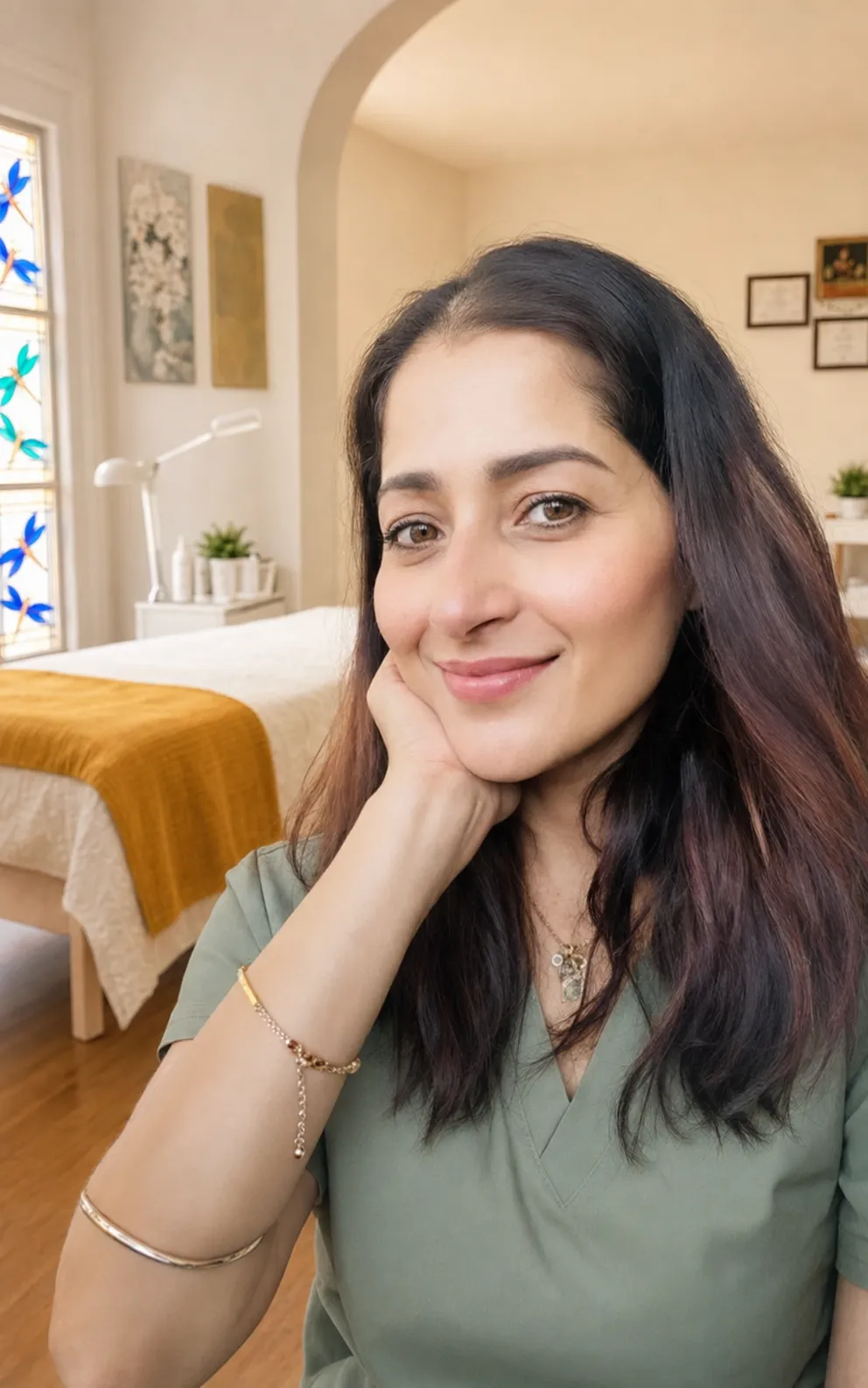
Rashmi Bhandari is a Licensed Aesthetician in the state of Colorado and holds a Master's in Ayurveda and Integrative Medicine. That academic training is paired with professional credentials: certification in Marma Therapy, advanced training in aromatherapy and herbalism, and ongoing continuing education in modern aesthetics. She is also a member of Associated Skin Care Professionals (ASCP).
Why does that matter? Because Ayurveda is a large, nuanced tradition, and the techniques connected to it — oil work, point pressure, traditional tools — carry assumptions about the body and about technique. Understanding them properly is part of using them well, rather than treating them as decoration. Professional training keeps the practice current and safe: the same aesthetician who understands traditional technique also understands skin barriers, professional formulations and the standards of licensed aesthetic care.
The two halves are not in competition here. The formal study of Ayurveda informs how the treatment is shaped; the licensed professional training determines what is appropriate for your skin and when restraint matters more than technique.
- Licensed Aesthetician in the state of Colorado
- Master's in Ayurveda and Integrative Medicine
- Certification in Marma Therapy
- Advanced Training in Aromatherapy & Herbalism
- Member of Associated Skin Care Professionals (ASCP)
A Traditional Tool
What Is a Kansa Wand?
A Kansa wand is a traditional metal facial tool long associated with Ayurvedic practice. It is used by gliding the rounded edge across the face, usually over a layer of oil or serum so the tool moves smoothly rather than dragging on the skin. The work is slow and rhythmic, and it is typically woven into a longer facial massage or sculpting sequence rather than used on its own.
What it offers is a different kind of hands-on experience. The wand covers more surface area than fingertips and moves with a steady, cooling glide, which many clients find calming and pleasantly different from a standard massage. Within a facial it is used to support the look of a refreshed, less puffy appearance and to ease the feeling of facial tension, and it is generally a quiet, relaxing part of the treatment.
It is worth being clear about what a Kansa wand is not. Some of the claims made about Ayurvedic tools online go well beyond what a facial can honestly offer, and those claims are not made here. The wand is a traditional massage implement, and within a facial it is used that way: for touch, for comfort, for relaxation and for the appearance and feel of the skin.
Two Origins, Not One
Kansa and Gua Sha: Two Different Traditions
Kansa and Gua Sha are both facial massage tools, and they are sometimes spoken about as if they were the same kind of thing. They are not, and the distinction is worth keeping clear.
Gua Sha comes from traditional Chinese practice and is usually performed with a smooth stone or a similarly shaped tool. Kansa comes from the Indian, Ayurvedic side of the studio's approach and is performed with a metal tool. They have different origins, different traditional contexts and different techniques: a Kansa wand tends to be used as a rounded, rolling glide, while Gua Sha is generally a flatter, edge-led stroke along defined pathways.
Both are used at Shrii as facial massage techniques where they suit the treatment, and each is treated as what it is. Grouping the two together would blur a real distinction, and it would also misattribute Gua Sha to Ayurveda, which it does not belong to. If you have a preference between them, or curiosity about either, it is a straightforward thing to mention at booking.
Gentle Point Pressure
What Is Marma-Inspired Facial Work?
Marma traditionally refers to specific points described within Ayurveda. In that tradition, gentle work at these points is associated with calm and restoration rather than with treating a specific complaint.
At Shrii, this appears as Marma-inspired technique: soft, deliberate point pressure incorporated into facial or scalp work as part of the restorative side of a treatment. It is not a separate procedure you book on its own, and it is not applied heavily or according to a rigid map. Where it is used, it is gentle, it is adjusted to your comfort, and its purpose within the appointment is relaxation and a quiet, settled sensory experience.
It is also important to describe Marma honestly. Traditional concepts like these can be explained as what they are — traditional concepts — without presenting them as established medical facts. Marma-inspired work at Shrii is used for comfort and calm, and it is not offered as treatment for medical or hormonal conditions, nor as a substitute for appropriate healthcare.
Scalp and Crown
Ayurvedic-Inspired Scalp Care
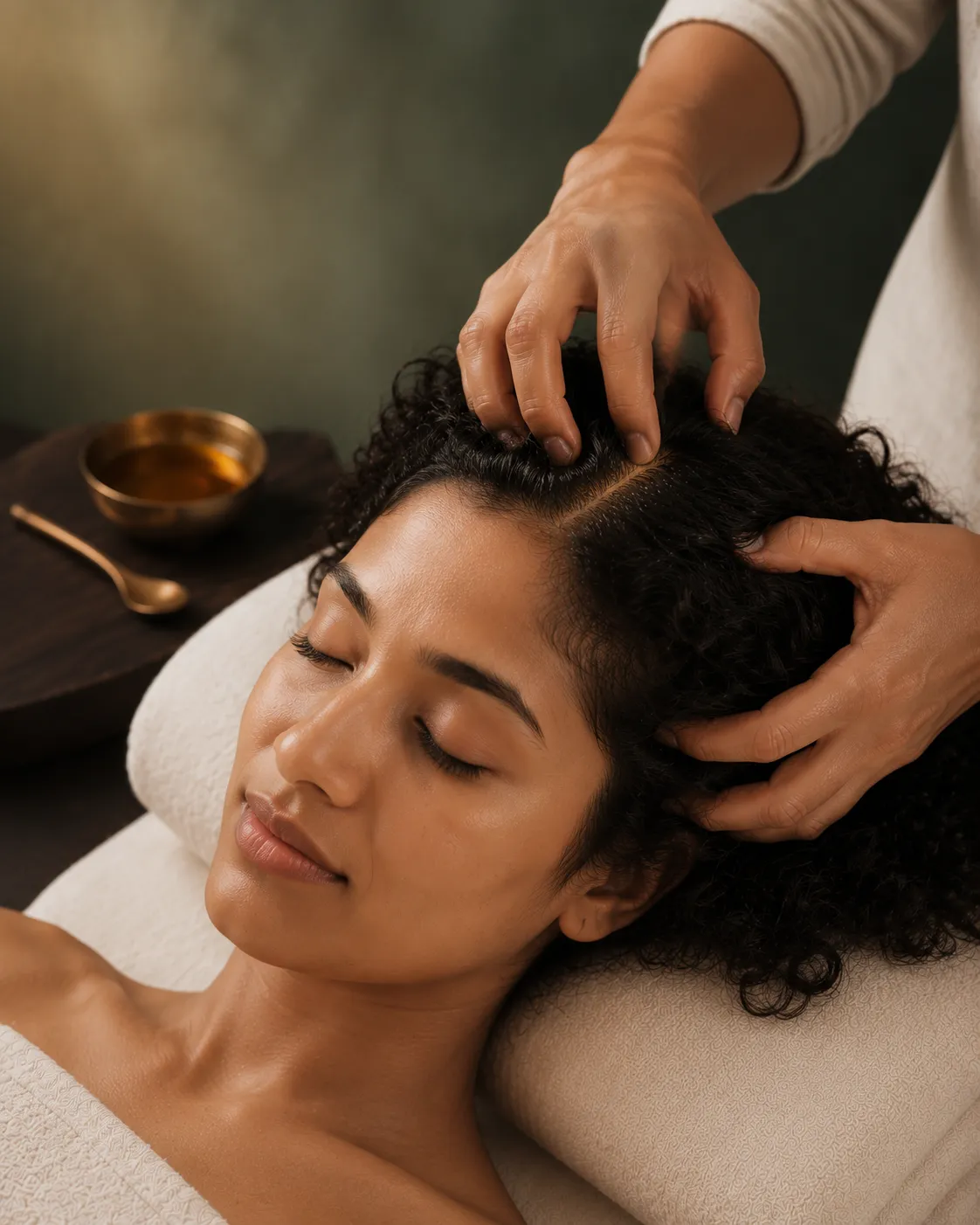
When warm herbal oil is used on the scalp, the work usually happens while a facial mask is setting, so the time is used rather than spent waiting. The scalp is massaged slowly, and crown and Marma-inspired pressure is applied gently where appropriate, which makes this the most quietly restorative stretch of a longer facial.
It is a sensory part of the treatment more than a visible one. Warm oil, slow movement and unhurried pressure are what most clients notice, along with the sense of the appointment slowing down. Because it takes place while the mask works, it adds to the experience without making the appointment feel rushed.
Scalp work of this kind appears in the longer facial rituals and can also be added to a treatment as the Scalp and Crown Marma Therapy enhancement. It is used most fully in the Shrii Signature Rasayana Ritual. If warm oil on the scalp is not something you want on a given day, that is easy to accommodate; it is always optional, and the treatment is built to work either way.
Grounding the Ritual
Pada Abhyanga: Ayurvedic-Inspired Foot Care
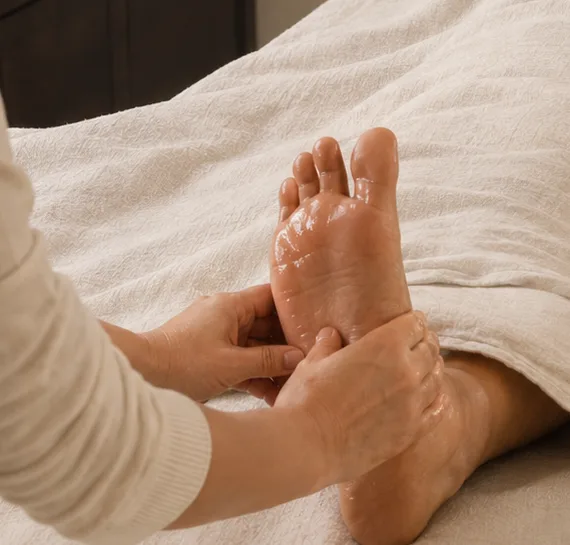
Pada Abhyanga traditionally refers to an Ayurvedic oil massage of the feet and lower legs. Like scalp work, it is often used as a grounding counterpoint to the more active parts of a facial — something that settles the whole body rather than treating one area.
At Shrii, a foot treatment of this kind is incorporated into selected rituals as a restorative complement, usually while facial products or masks are working. Warm or cool botanical oils are used, and the feet and lower legs are massaged slowly. Clients often describe it as the point at which the appointment becomes fully quiet, because attention moves away from the face and the body has a chance to slow down with it.
It would be easy to overstate what this offers, so it is worth being plain: the foot work here is part of the treatment's comfort and relaxation, not a medical therapy. It is a wellness-oriented complement to the facial, chosen because it suits the pace of a longer ritual. It is included most reliably in the Shrii Signature Rasayana Ritual, and in shorter treatments it is optional rather than automatic.
Botanical, Carefully Chosen
The Role of Botanical Oils and Herbal Preparations
Botanical oils and herbal preparations are a real part of the treatment here, but they are chosen with the same care as any other ingredient. Warmed oils, traditional blends and herbal pastes such as Ubtan are used where they suit the skin and the step they belong to — for comfort, for texture and for the sensory character of a facial — and not simply because they are natural.
That distinction matters. Natural and botanical ingredients are not automatically gentler or safer; any ingredient, plant-based or otherwise, can irritate skin that is sensitive to it. The question that guides product selection here is fit: how an oil, preparation or professional formulation behaves on your skin, how it layers with the rest of the treatment, and whether it serves the goal of the appointment. Warmth is used where it helps a product sit comfortably, and left out where it would not.
Botanical care and professional formulation are not opposites at Shrii. They sit alongside one another, each doing the work it does best. Learn more about Shrii's approach to natural and holistic skincare.
Both, Not Either
Tradition and Modern Aesthetics Can Work Together
One of the more common assumptions about Ayurvedic care is that it asks you to choose: either a modern, results-focused facial or a traditional, ritual-based one. At Shrii the treatment is designed so that you do not have to. Both are present in the same appointment, each doing the work it is actually good at.
The modern half is unmistakably modern. It includes professional skin assessment, thorough cleansing, appropriate exfoliation, hydration and well-formulated professional products chosen for your skin. That is where much of the visible, results-focused work happens, and it is not diluted to make room for the traditional side.
The Ayurvedic-inspired half contributes something different: warmth, slow hands-on technique, Kansa wand work, Marma-inspired pressure, botanical preparations and a pace that treats the appointment as an experience rather than a sequence of steps. It shapes how the treatment feels and how it is personalized, and it is used where it adds something genuine rather than as decoration.
The goal is not to modernize Ayurveda or to make skincare mystical. It is simply to use each tradition where it contributes something meaningful, and to leave the parts that do not serve your skin out of the room.
The Experience
What to Expect During an Ayurvedic Facial
01
Skin Consultation
The appointment opens with a conversation and a close look at your skin: how it has been behaving, what it is sensitive to, and what you would like to change. Nothing is decided before this.
02
Cleansing
The face is cleansed gently and assessed as it is worked on, so what follows is matched to what your skin is showing today rather than to a plan made in advance.
03
Botanical or Herbal Care
Where it suits the skin, botanical oils or herbal preparations such as Ubtan are worked in, warmed and applied slowly — as much for comfort and texture as for the treatment itself.
04
Professional Treatment
This is the professional core of the facial: exfoliation, hydration and any treatment masque or serum appropriate to your skin, chosen and adjusted as the appointment moves.
05
Ayurvedic-Inspired Hands-On Work
Kansa wand work, Marma-inspired pressure, facial massage or other hands-on technique may be incorporated here — for comfort and a refreshed appearance, and eased or skipped if your skin or you would prefer.
06
Restorative Finish
Depending on the treatment, this may include scalp work, a grounding foot treatment or a quieter closing sequence, while the finishing products are applied to the skin.
07
Aftercare
You leave with simple, realistic guidance rather than a long shopping list — aftercare adjusted to your skin, the season and what you will actually keep up with.
Not every treatment includes every step, and none of the sequence is fixed. A shorter facial might move through consultation, cleansing, professional treatment and aftercare, while a longer ritual adds botanical care, hands-on technique and a restorative finish. The order flexes around the treatment and around you.
The Ayurvedic Menu
Ayurvedic Facial Treatments at Shrii
Three treatments where Ayurvedic tradition and professional skincare meet, each shaped around different skin needs and levels of restoration.
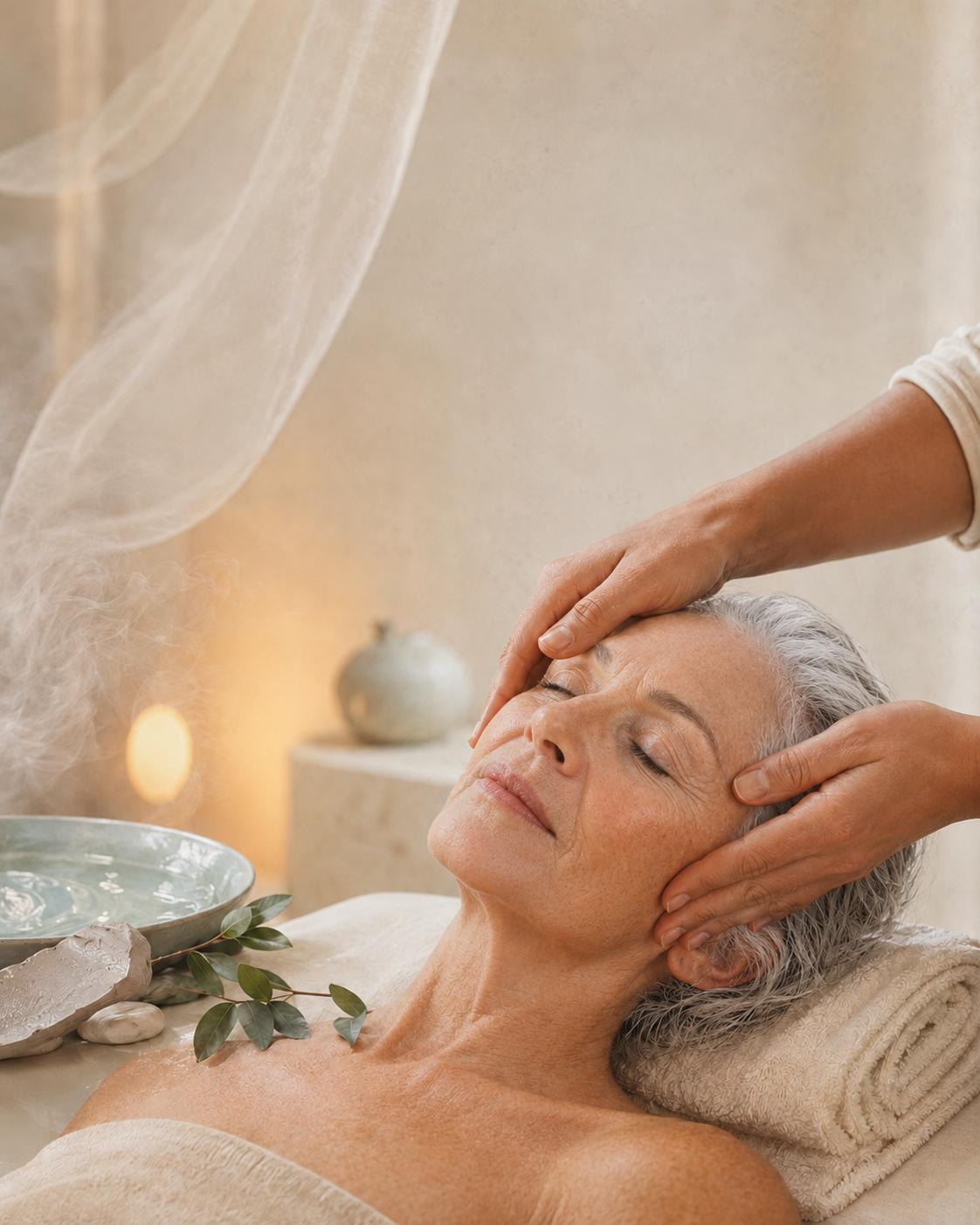
Elemental Balance Facial (Dosha Samya)
The most approachable place to begin. This comfort-first facial is composed around your skin's balance, moving through gentle cleansing, herbal Ubtan exfoliation and a custom botanical serum, with soft Marma point pressure to settle the senses. Personalization, botanicals and gentle technique in a single unhurried appointment.
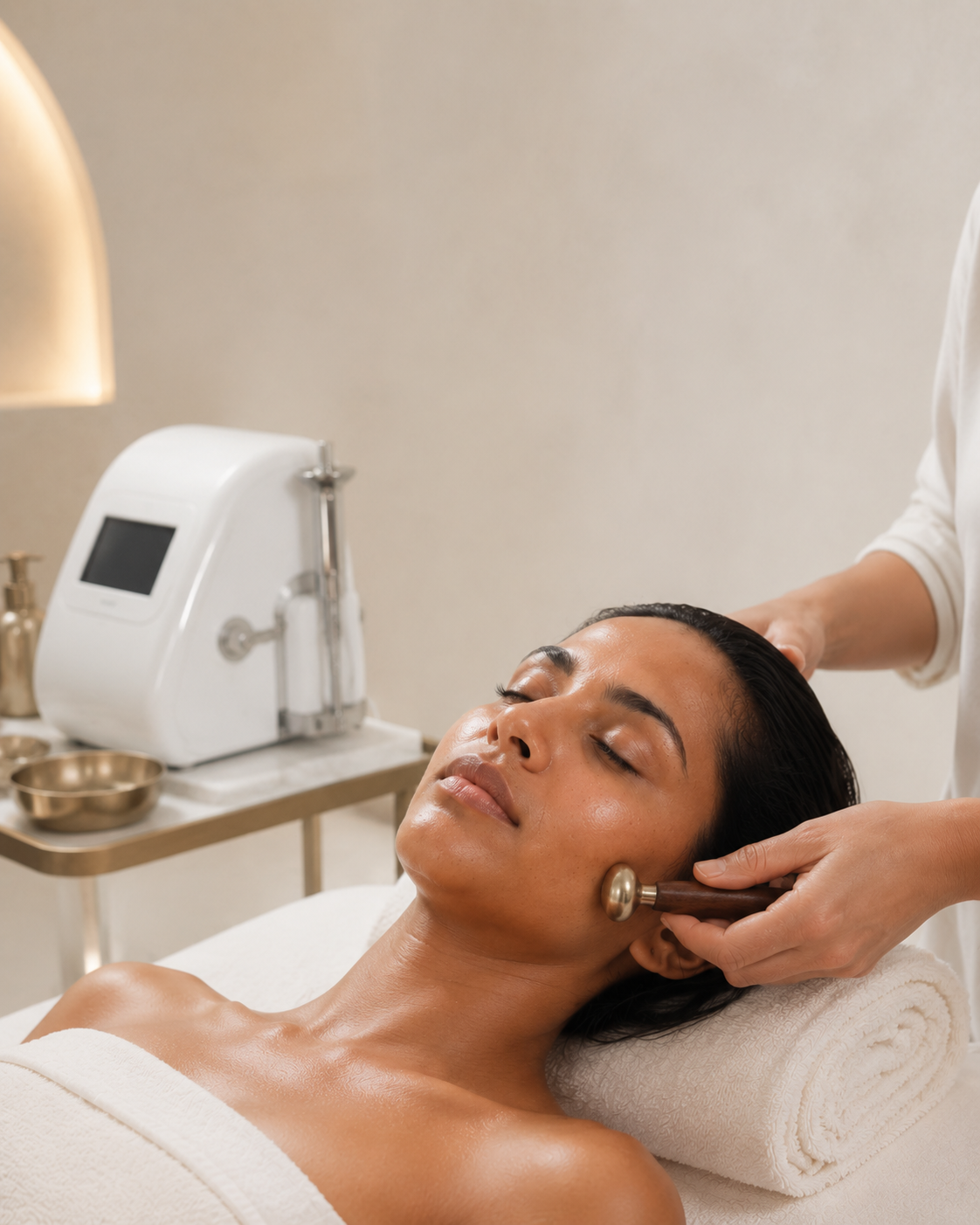
East-West Integrative Radiance Facial (Ojas)
Modern and traditional in a single treatment. The first half resets the skin with professional cleansing and exfoliation; the second glides a warm Kansa wand to lift and encourage a fresher, less puffy look. A scalp and crown Marma massage closes the appointment in calm.
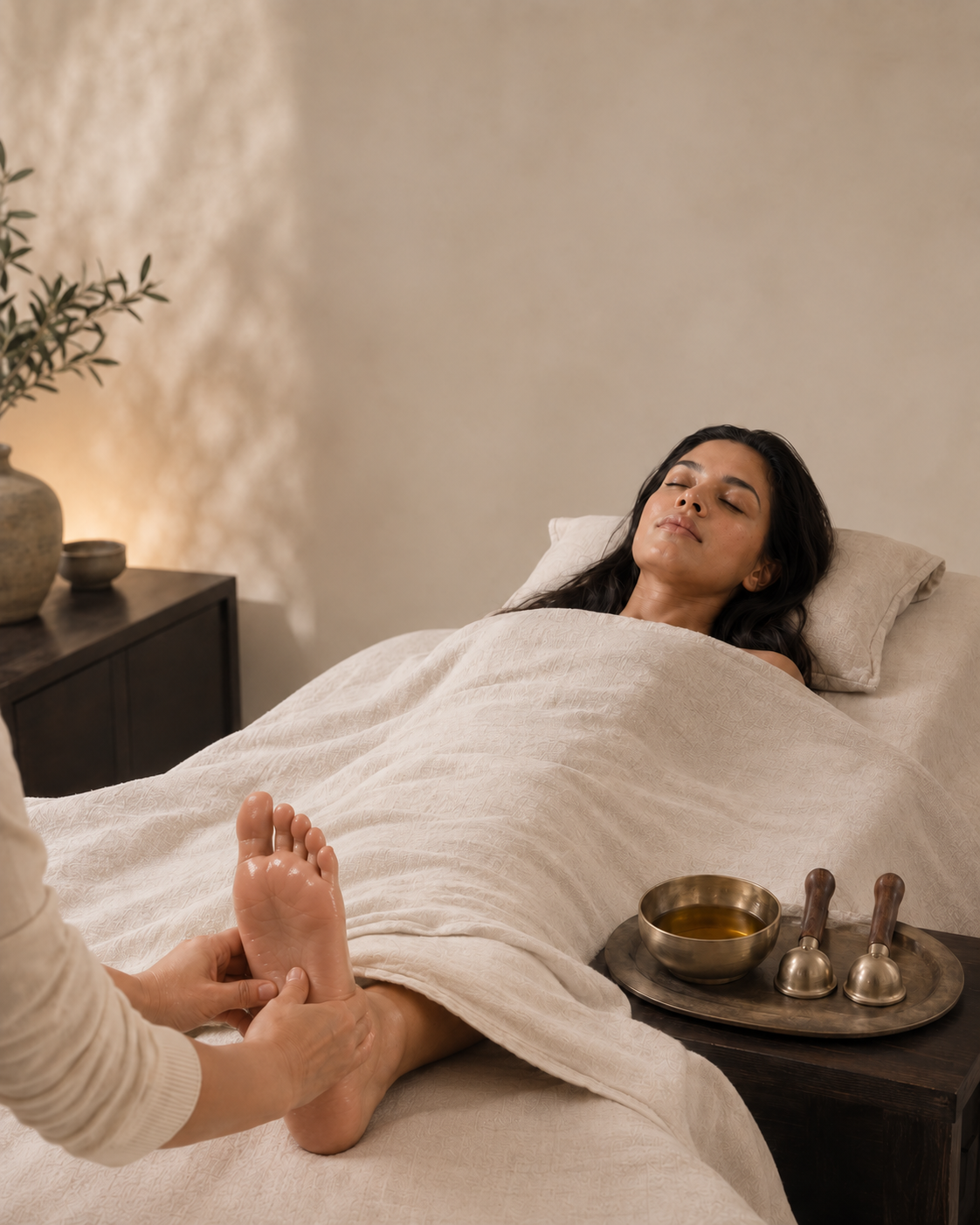
Shrii Signature Rasayana Ritual Facial
The fullest expression of the studio's Ayurvedic-inspired approach. Extended Kansa wand work with warm botanical serums gives way to custom facial Marma balancing, while the mask sets during warm-oil scalp work and a grounding Pada Abhyanga foot treatment. The most immersive ritual on the menu.
A Little Context
Understanding the Sanskrit Names
A few of the treatments carry Sanskrit names, and it helps to know what they are pointing at. Dosha Samya, the name attached to the Elemental Balance Facial, refers to the idea of balance among the doshas — the traditional Ayurvedic framework described earlier. Ojas, the name attached to the East-West Integrative Radiance Facial, is a traditional Ayurvedic concept of vitality and radiant, well-cared-for skin. Rasayana, the name attached to the studio's signature ritual, describes a traditional Ayurvedic idea of restoration and renewal.
These are traditional terms, offered as the names they are. They describe the intentions behind the treatments rather than making medical promises: none of them means that a facial treats a medical condition or produces clinical change in the skin. If the vocabulary is new to you, the treatment matters more than the translation — but a little context makes the menu easier to read.
A Considered Fit
Who Is an Ayurvedic Facial For?
An Ayurvedic facial tends to suit a particular kind of client, though the reasons vary. It is a natural fit for people who are curious about Ayurveda and want to experience it through skincare rather than study it; for clients who want genuine relaxation alongside visible results, rather than one or the other; and for anyone who enjoys hands-on treatments and the slower pace they bring.
It also appeals to people drawn to botanical oils and traditional techniques, to those who want a less clinical environment and one-client-at-a-time attention, and to anyone curious about what a Kansa wand or Marma-inspired work actually feels like. Some clients come to it simply because their skin prefers gentle, personalized care over intensity.
None of that requires any knowledge of Ayurveda beforehand. You do not need to know your dosha, recognize a Sanskrit name or understand a single traditional concept. Bring your skin, your questions if you have them, and your goals; the treatment is shaped around those, and the philosophy is explained only as much as you want it to be.
Choosing by Fit
When Another Facial May Be a Better Fit
An Ayurvedic facial is a considered choice, not a universal one, and it is worth saying when something else on the menu may serve you better.
If your main goal is intensive professional resurfacing — working on texture, congestion or dullness with a more active, results-first protocol — the Modern Radiance Facial is likely the closer fit. It leans on professional-grade exfoliation, extraction where needed and targeted treatment masques, with less of the traditional, hands-on ritual around it.
Equally, if what you want is straightforward professional maintenance and a clear, efficient appointment rather than a longer immersive experience, you may not need the fuller Ayurvedic ritual at all. There is no expectation that the signature treatment is the right answer for everyone.
Choosing by fit rather than by upsell is part of how the studio works. If you are unsure, describe what your skin is doing and what you are hoping for, and we will point you to the treatment that genuinely matches — including one that keeps the Ayurvedic influence light, or leaves it out entirely.
Related, Not Identical
Is an Ayurvedic Facial the Same as a Holistic Facial?
The two words overlap, but they do not mean the same thing. Holistic describes how Shrii approaches a facial overall: as personalized care that looks at your skin in context — its condition, comfort, the season, your lifestyle and your goals — rather than running a fixed protocol. It is about the whole, considered treatment.
Ayurvedic is more specific. It refers to techniques, concepts and traditions that come from Ayurveda: Kansa wand work, Marma-inspired pressure, botanical and herbal preparations, oil work, and the traditional frameworks behind them.
One can be true without the other. Every Ayurvedic-oriented facial at Shrii is holistic, because personalization is the basis of all of them. But not every holistic treatment needs strong Ayurvedic elements — a facial can be thoughtful, individualized and restorative while staying close to a modern professional protocol.
The distinction matters mostly for expectations: if you are drawn to the holistic approach but not specifically to Ayurveda, there is a facial for that. If it is the Ayurvedic side you want, the treatments on this page lean furthest into it, and you can explore our natural and holistic facials in Aurora for the broader approach.
Clear About Scope
Ayurvedic Facials and Professional Scope
It is worth being direct about scope, because Ayurvedic skincare is often described in language that goes further than a facial can honestly go. Shrii provides professional aesthetic and wellness services. Ayurvedic-inspired facial techniques are used for cosmetic care, relaxation and the treatment experience; they do not diagnose or treat medical conditions.
That means a facial here is not a substitute for medical care. If you have a skin condition that has been diagnosed, or symptoms that concern you, it should remain under the care of an appropriate healthcare professional, and a facial is best understood as working alongside that care rather than replacing it. Nothing in the treatment is intended to diagnose or treat disease, and no claims of that kind are made here.
Where a concern is cosmetic — dryness, dehydration, tightness, dullness or a loss of radiance, for example — a personalized facial can genuinely support comfort and appearance. If dehydration sounds like the main thing your skin is dealing with, there is a closer, dedicated look at how that is approached elsewhere: our guidance for dry and dehydrated skin goes into it in more detail.
Good to Know
Frequently Asked Questions About Ayurvedic Facials
What is an Ayurvedic facial?
An Ayurvedic facial is a professional facial that draws on the traditions of Ayurveda — botanical and herbal preparations, warm oil work, Marma-inspired touch and traditional tools such as the Kansa wand — while remaining a licensed aesthetic treatment. At Shrii, Ayurveda complements professional skincare rather than replacing it, and the approach is always personalized to your skin.
Do I need to know my dosha?
No. You do not need to know your dosha to book or to benefit from an Ayurvedic facial. Doshas are one traditional framework that may inform how a treatment is thought about, but Rashmi looks directly at your skin and adjusts the treatment to what she finds. If you are curious, she can explain the traditional concepts as they come up.
What is a Kansa wand?
A Kansa wand is a traditional metal facial tool used in Ayurvedic practice. It is glided over the face with oil or serum as part of a facial massage, offering a slow, cooling, hands-on experience. It is used here to support a refreshed appearance and to ease the feeling of facial tension, and it is not offered as a medical treatment.
Is Gua Sha Ayurvedic?
No. Gua Sha comes from traditional Chinese practice and is usually performed with a stone tool. Kansa comes from the Indian, Ayurvedic tradition and is a metal tool. Both are used at Shrii where they suit a treatment, but they are separate techniques from separate traditions, not the same thing under two names.
What is Marma?
Marma traditionally refers to specific points described within Ayurveda, where body, mind and circulation are understood to meet. At Shrii, Marma-inspired technique means gentle point pressure incorporated into facial or scalp work for relaxation and comfort. It is described as a traditional concept rather than presented as established medical fact, and it is not used to treat medical conditions.
What is Pada Abhyanga?
Pada Abhyanga traditionally refers to an Ayurvedic oil massage of the feet and lower legs. At Shrii a grounding foot treatment of this kind is incorporated into selected rituals as a restorative complement, usually while facial products or masks are working. It is used for comfort and relaxation rather than for medical benefit.
Are Ayurvedic facials suitable for all skin types?
Ayurvedic facials are personalized rather than universally suitable. Almost any skin type can be cared for this way, but the products, level of exfoliation and techniques are adjusted to your skin — including sensitivity or reactivity. Suitability is something Rashmi assesses at consultation rather than assumes in advance.
Are Ayurvedic facials completely natural?
Not entirely, and that is deliberate. Botanical oils, herbal preparations and traditional ingredients are used where they suit your skin, alongside well-formulated professional products chosen for the treatment. Natural is not treated as automatically gentler or safer here; ingredient suitability matters more than a natural label.
Which Shrii facial has the strongest Ayurvedic influence?
The Shrii Signature Rasayana Ritual leans furthest into the Ayurvedic-inspired side of the menu, with extended Kansa wand work, custom Marma balancing, scalp work and a grounding foot treatment. The Elemental Balance Facial is the gentler, more accessible starting point, and the East-West Integrative Radiance Facial sits between the two.
Do Ayurvedic facials replace dermatological treatment?
No. An Ayurvedic facial is cosmetic and wellness care, not medical treatment. It does not diagnose or treat skin conditions, and it is not a replacement for dermatological or other medical care. If you have a diagnosed condition, it should remain under the care of an appropriate healthcare professional.
Begin Your Ritual
Experience Ayurveda Through the Art of the Facial
You do not need to understand Ayurveda before you arrive. Come with your skin, your goals and your curiosity, and Rashmi will shape the treatment around what your skin needs, introducing Ayurvedic techniques where they add something meaningful — and leaving them out where they would not.